
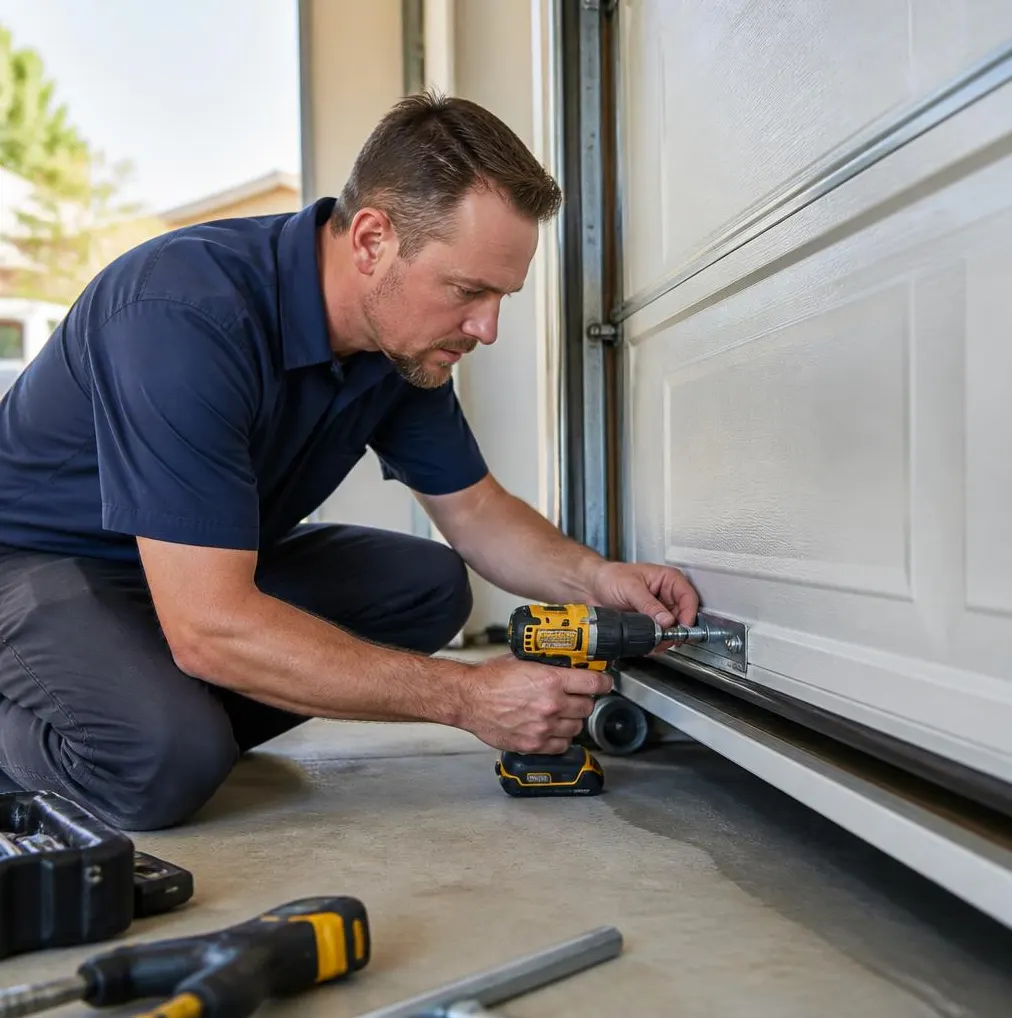
What a Technician Sees on These Calls
By the time a service call comes in about a garage door acting up right before winter, it's usually one of three things: a door that's suddenly noisy and jerky when it used to run quiet, a bottom seal that's cracked and curling away from the concrete, or an opener that strains and clicks without actually lifting the door. Often the homeowner says it was fine all summer. What changed is the temperature. Metal contracts, old rubber stiffens, and any slack or wear that was tolerable in July starts causing real problems once the first cold snap hits. Houses in this area tend to have original garage doors and hardware from whenever they were built, so a lot of these issues have been building quietly for years and just need one freeze-thaw cycle to show up.
Start With the Weatherstripping
The rubber seal along the bottom of the door and the vinyl strips along the sides and top are the first line of defense against wind-driven snow and meltwater. On older doors, this material gets brittle, cracks, or pulls loose from years of sun and salt exposure. Run your hand along the bottom seal and check for gaps, flattened sections, or tears. If daylight shows underneath the closed door, cold air, snow, and slush will get in too. Replacement seal kits are inexpensive and most homeowners can install one themselves, but on older tracks the retaining groove is sometimes warped or rusted enough that it won't hold a new seal properly — that's a sign the door itself may need attention, not just the seal.
Why Springs Fail More in Winter
Torsion springs lose some flexibility as temperatures drop, and the metal becomes more prone to snapping under the same stress it handled fine in warmer months. This is why garage door companies across the Northeast see a spike in spring replacement calls once the nights start dipping toward freezing. If your spring looks stretched, has visible gaps between coils, or the door has started feeling heavier when you lift it manually, don't wait for it to fail completely — a broken spring under tension can cause real damage to the door or injure someone nearby. This isn't a DIY repair.
Lubricate the Right Way
Hinges, rollers, and the track itself need lubrication going into winter, but skip the WD-40. It's a solvent, not a long-term lubricant, and it can actually gum up in cold temperatures. Use a silicone-based garage door lubricant on the hinges, rollers, and the torsion spring itself (if accessible), and wipe down the tracks before applying. This matters more here than in drier climates because humid summers followed by freezing winters create a freeze-thaw cycle that dries out old grease and lets rust creep in faster.
Deal With Salt and Road Grime Now
Once plows and salt trucks are out, salt spray and slush get kicked up onto garage doors and tracks from the driveway and street, especially on homes close to the road. That residue accelerates corrosion on hardware, especially original hinges and tracks that have been in place for decades. Hosing down the lower panels and tracks periodically through winter, and wiping excess moisture off exposed metal, slows down the rust that otherwise eats away at hardware long before the door itself is ready to be replaced.
Check the Opener and the Safety Reverse
Cold weather puts extra strain on opener motors, especially older chain-drive units working against a door that's gotten heavier or less balanced over time. Test the auto-reverse safety feature by placing a block of wood in the door's path and making sure it stops and reverses on contact — this is especially important after a season of shoveling and snow blowing near the sensors, which can knock them out of alignment without anyone noticing. If you're prone to power outages during nor'easters, now is also the time to check whether your opener has battery backup, so you're not stuck manually hauling the door open during a storm.
When to Call Morganville Garage Door
If you're hearing new noises, seeing a seal that won't seal, or noticing your door struggling before the real cold even arrives, that's the window to get ahead of it rather than deal with a failure during a January freeze. Our garage door maintenance visits cover the inspection and adjustments above — balance, hardware, lubrication, and weatherstripping — and if a spring is showing wear, we handle spring replacement on the spot with the right tension for your door's size and age. For homes with original doors and older openers, this is also a good time to flag anything that's closer to the end of its life before it fails on a Sunday night in the middle of a storm.
If your garage door needs attention before winter sets in, call Morganville Garage Door — we serve Morganville, Marlboro, Old Bridge, Matawan, Aberdeen, Freehold, Holmdel, and Sayreville, and we'll get it handled before the first real freeze.